|
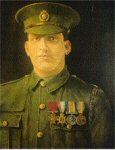
During World War I, Royal Marine, Lance-Corporal
Walter Richard Parker was the only person in the area to be awarded
the Victoria Cross.
The Victoria Cross is the highest and
most prestigious award for gallantry in the face of the enemy
that can be awarded to British and Commonwealth forces.
Read
more
>>
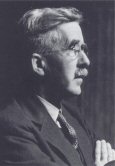
Perhaps Stapleford's most 'famous' son was
the author Arthour Mee; known throughout the world for his Children's
Encyclopaedia, Childrens Picture Bible and Children's
Newspaper.
Read more
>>
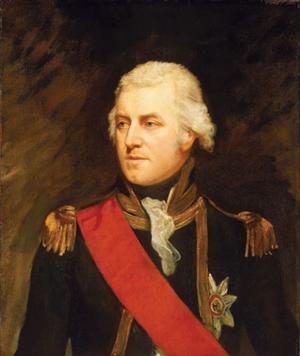
Lord of the Manor of Stapleford. Sir
John commanded the Royal Navy during the War of American Independence
and the Napoleonic Wars, in which he became a Rear Admiral.
Amongst his many honours he was made Knight of the Bath and
Knight of the Hanoverian Order Guelph. For several years he
was a Member of Parliament for Nottingham.
Read
more
>>
Dave was one of England's greatest central
defenders of all time, some would say the greatest!
The youngest of eight children, Dave
Watson was brought up in Stapleford. After work as a farm labourer
and trainee electrician, his older brother arranged for him
to have a trial with Notts County and he became a professional
footballer at the age of 20. During his career he played 65
times for England, won an FA Cup medal in 1973 with Sunderland
and a League Cup medal with Manchester City in 1976. Dave's
career ended where it had begun at Notts County.
Read
more
>>
Slavomir Rawicz
(1915-2004)
Slavomir Rawicz was a young Polish
cavelry officer at the begimimg of world war II. He was caught
up in events following the invasion of Poland by the Germans and
the subsequent partition of the country with the Russians. The
Russians arrested Slavomir and he was subject to a a brutal interrogation
and a farce of a trial and was sentenced to 25 years hard labour
in the Gulags.
After a three-month journey to
Siberia in the depths of winter he escaped with six companions,
realising that to stay in the camp meant almost certain death.
In June 1941 they crossed the trans-Siberian railway and headed
south, climbing into Tibet and, finally, freedom nine months later
in March 1942 after travelling on foot through some of the harshest
regions in the world, including the Gobi dessert.
After the war, Slavomir moved to England
and settled in Sandiacre (close to Stapleford) and in 1955 wrote
a book - The Long Walk - about his adventurous escape
to freedom.
Read
obituary (The Guardian)
>>
|




 Weather Nottingham